Would you like to order by phone? You can reach us at +31 (0)299-399 999
 Nederlands
 English
 Deutsch
 Français
NederlandsEnglishDeutschFrançais
The label on a frozen product contains important information that supports the customer in making the right choices in various ways. Yet reading such a label is not always easy. What do all the codes mean? And what should you pay attention to if you want to use traceable, sustainable or safe products?
In this article, we explain step by step how to read a frozen food label, and what to look for when it comes to origin, labels and traceability.
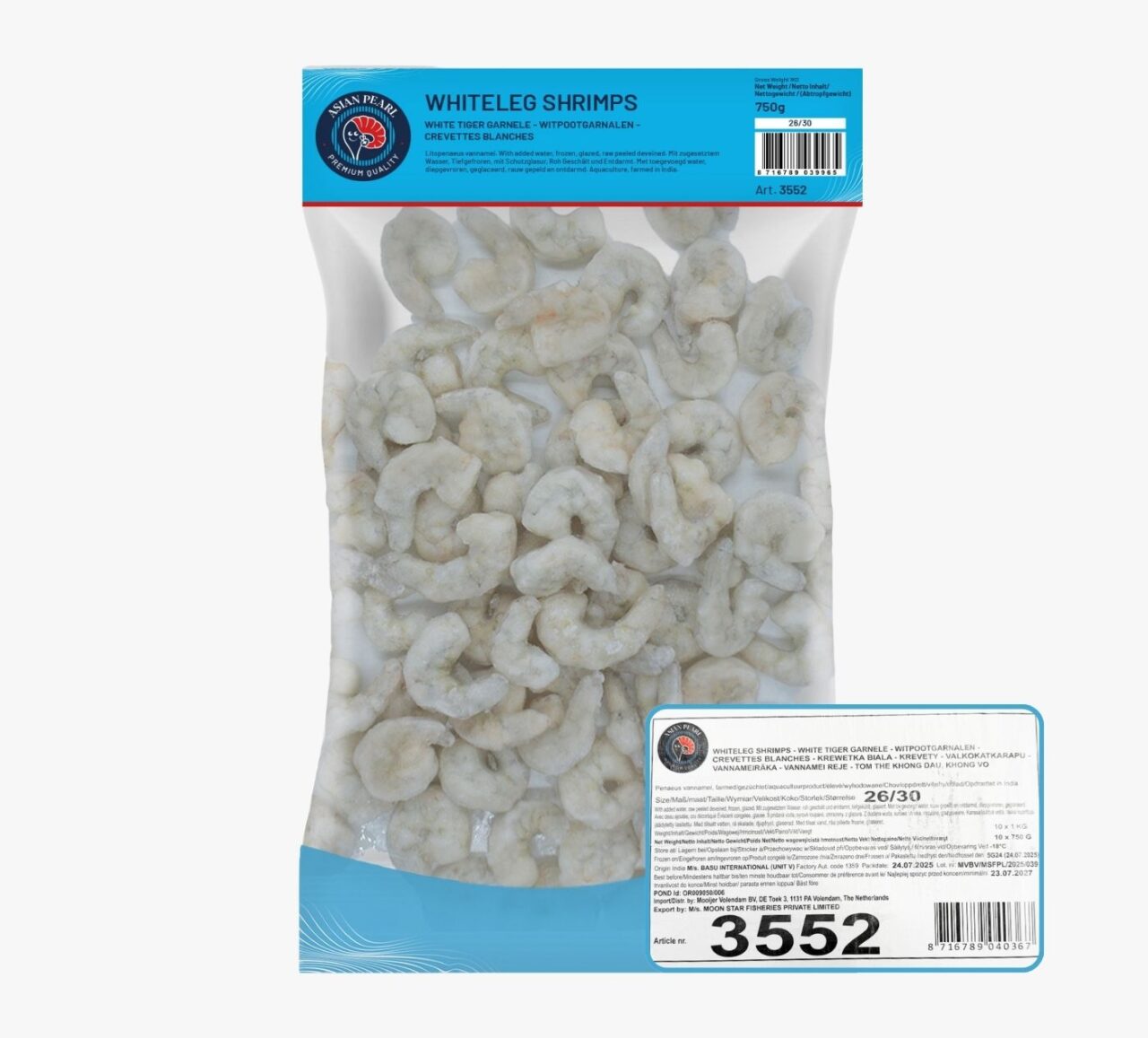
It starts with the product name: for example, “Peeled shrimp, cooked, IQF.” This product name tells you directly:
Also pay attention to terms such as “natural,” “breaded,” “smoked” or “precooked.” This determines your preparation method.
The label should always indicate the origin of the product:
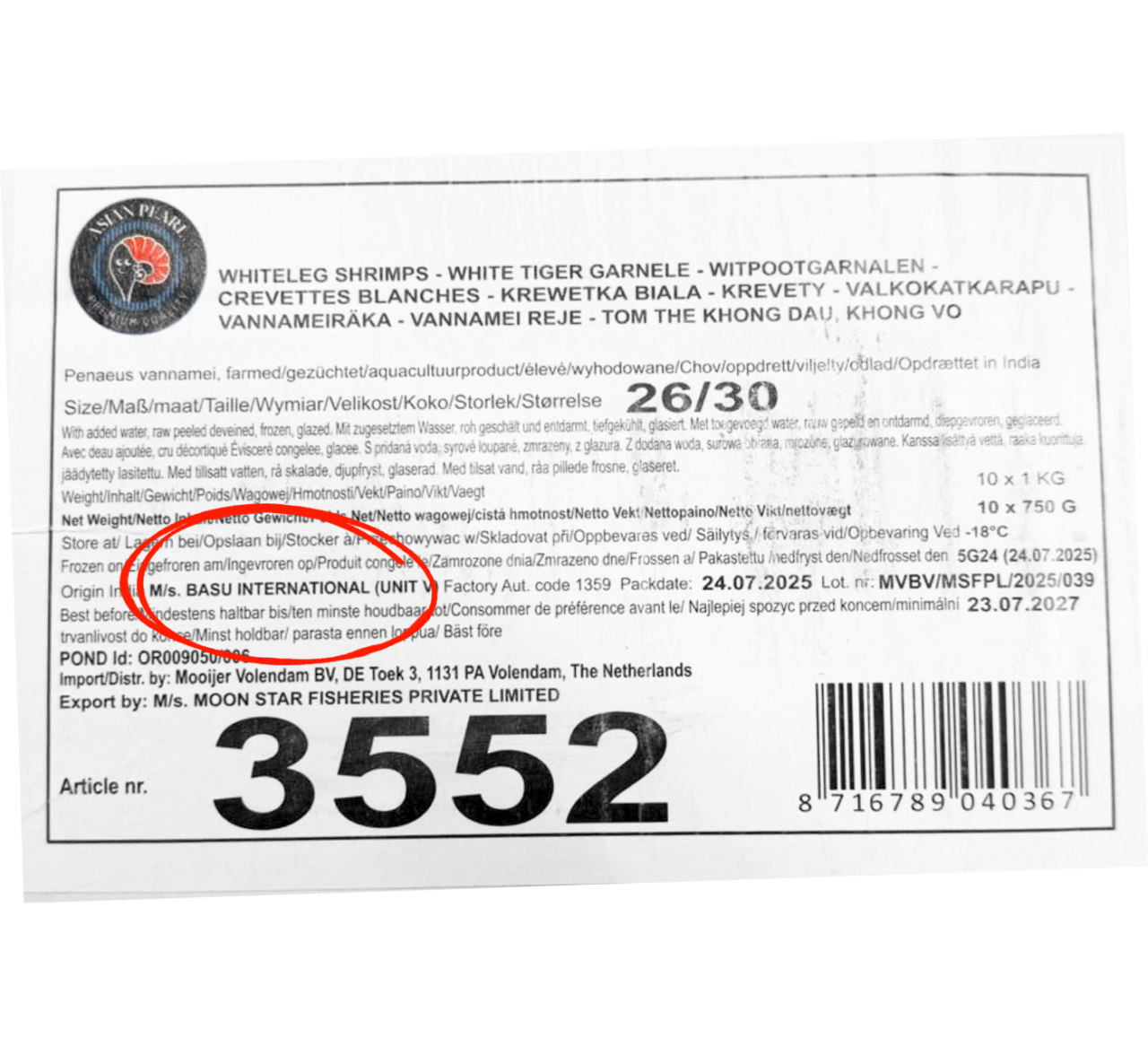
Note that the catch location is not always the same as the country of processing. In fish products, for example, this may mean: caught in Suriname, packaged in the Netherlands.
Each product contains a tracking code or (batch) lot number. This code allows the product to be tracked throughout the production chain:
At Mooijer we use tracking codes to guarantee that origin and processing are always traceable. Especially with certified products this is essential.
Always check:
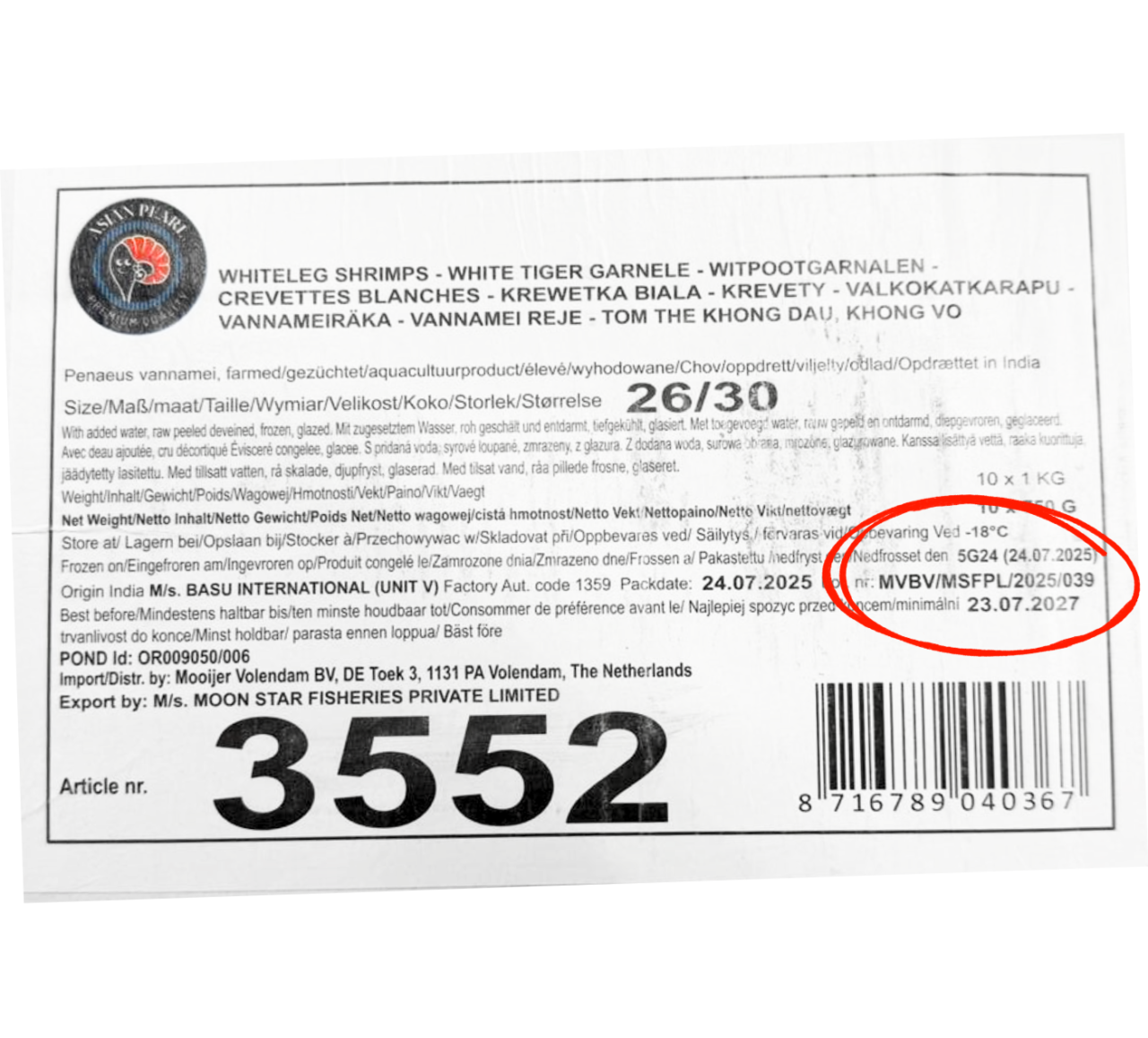
This is important for food safety and quality.
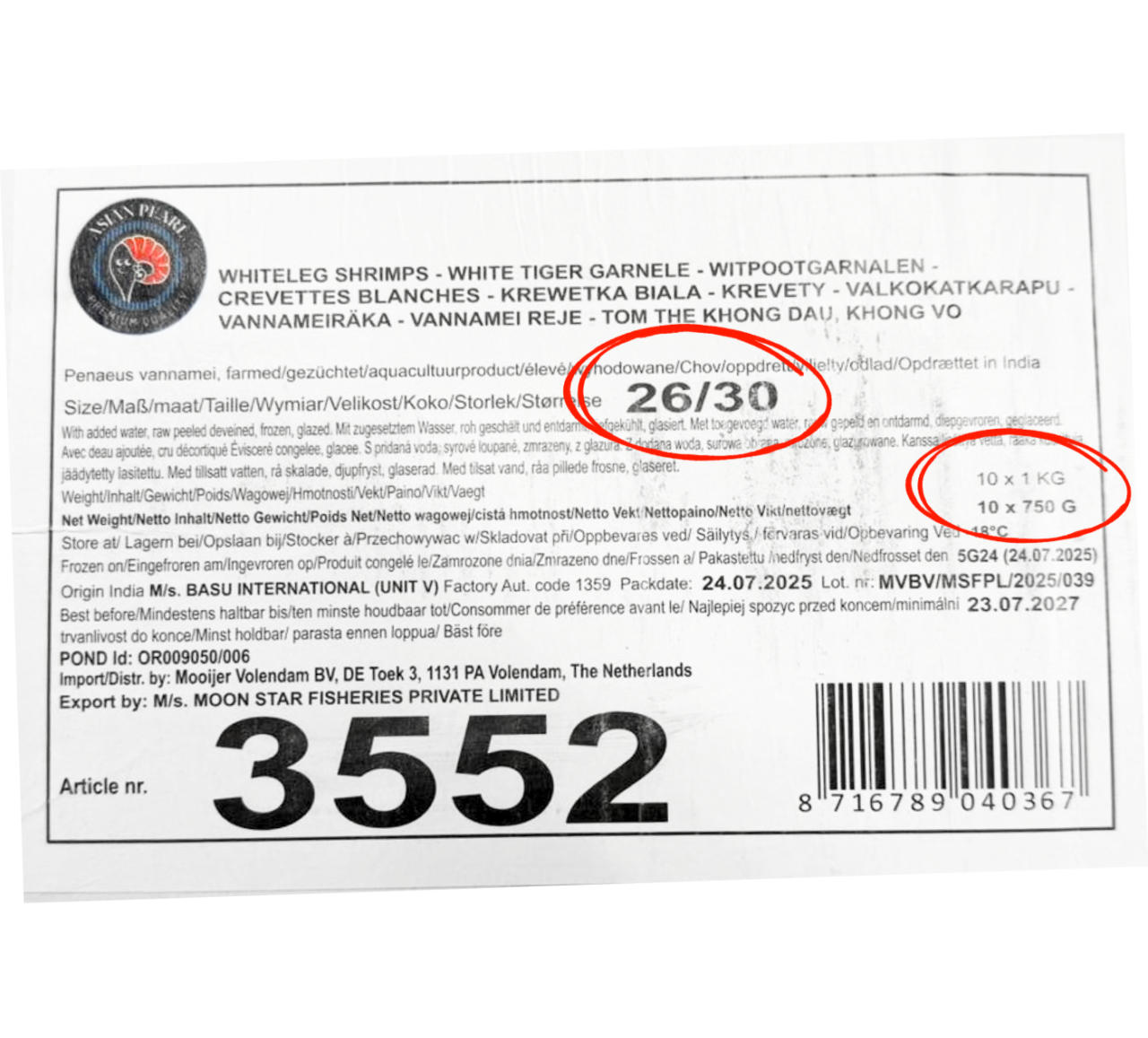
The label states the net weight and sometimes the poured weight (for glaze products).
Note logos or designations of:
These labels indicate that the product meets sustainability and traceability requirements. Want to be sure the label is valid? Check the code on the authority’s website.
Compound or processed products (such as dim sum or spring rolls) are listed with:
This is especially important for customers with dietary requirements or allergies.
A frozen food label contains much more than just a name and a date. By paying close attention to product designation, origin, traceability and quality marks, you make better choices as a professional. At Mooijer Volendam, we value transparency: that’s why you’ll find the information you need to work with confidence on every product.
Want to know more about traceable or certified frozen foods? Contact our sales team or browse our knowledge base further.